
 The Managing Partners Podcast
-
Watch the episode
About S. Kent Choi, DC
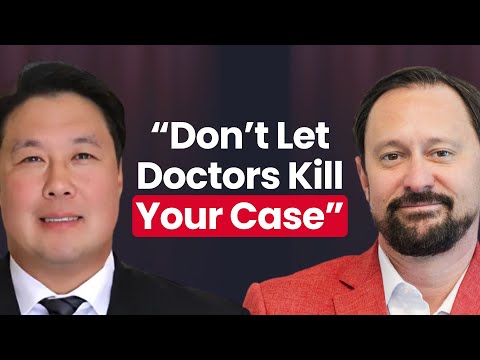
In this episode, Kevin Daisey interviews Kent Choi, a chiropractor with extensive experience in personal injury (PI) cases. Kent shares insights on the common pitfalls that medical providers encounter in PI cases, emphasizing the importance of proper documentation, credibility, causation, and consistency in medical records. He discusses how these factors can significantly impact the outcomes of PI cases and offers best practices for medical providers to enhance their collaboration with attorneys. Kent also emphasizes the importance of a diverse team of medical specialists to ensure that patients receive the best possible care.
Takeaways:
- Medical providers often unintentionally harm PI cases.
- Proper documentation is crucial for successful claims.
- Credibility, causation, and consistency are key concepts.
- Collaboration among medical specialists is essential.
- Pain scale numbers can create bias in medical records.
- Less is more when it comes to documentation.
- Understanding insurance policies is vital for providers.
- Attorneys and medical providers need to work together effectively.
- Educating providers on PI cases can improve outcomes.
- Creating a diversified team can enhance patient care.
Episode Transcript:
Kevin Daisey
All right. What’s going on everyone? We are recording. I have a really interesting guest today. Someone I met in California. I was there for LawDiGras, hanging out with lots of folks that I know, lots of guests off this show. You know, Bob Simon and Jen Gore and just a lot of folks I was there meeting with and ran into this gentleman. We actually hooked up a couple of times and
connected throughout the days and, and talked about, what he’s, what he does. And I remember him saying, Hey, you got to come to my talk. It’s a really interesting talk. it’s totally different. And I was like, okay, I’m gonna, I’ll be there. And of course I did get this talking. so we’ve reconnected recently and, he’s got to just, a different take here and something that I haven’t really been exposed to myself very much as a marketer.
for a lot of PI firms. I want to introduce you to Kent. So Kent, welcome to the show.
S. Kent Choi, DC (01:32)
Well, thank you for having me. It’s a pleasure and honor to be here.
Kevin Daisey (01:36)
Yeah. Appreciate you coming on the show to share today. you know, I guess I want to dive right into the conversation and maybe we’ll have you tell your, background here in just a little bit. But, you know, one of the things that brought to me is like, you know, these medical professionals and he’s like, I got this topic, know, how they could be unintentionally.
you know, calls and problems with in your cases. And so I was like, oh, that’s, that’s interesting. And so, you know, I just want you to kind of dive right into it. I know you have a few things to share, a couple of things, three different concepts for us to think about here, but just dive right in. Like, what does that mean? And what should these lawyers that are listening in, the PI firms out there be thinking about and how they can change their mindset about this?
S. Kent Choi (02:26)
Great, yeah, my background is, I’ve been a practicing chiropractor for 25 years and as most of us, rather than getting hospital jobs or maybe working in a big orthopedic clinic, which some of my colleagues have done, we start our own businesses. And when you start your own business, you pretty much let your family and friends know, I opened an office here and…
As you trek along, you get involved with the insurance companies of taking HMOs, PPOs, worker comp cases. You’ll have some attorneys look for the next person down the street, or maybe they use social media or something to find a reputable chiropractor. I’ve always worked with medical doctors from the very beginning. So it was a natural fit for me to be involved with personal injury. So for the first 15 years, I had pretty much a diversified
patient base, which comprised a minority of personal injury cases. And for 15 years, it took me 15 years to realize there was something wrong with the whole personal injury, lean work business, meaning I don’t know if it was my problem or the attorney’s problem or the case manager’s problem. I was just someone treating someone.
providing whatever medical records I learned in school or from someone else and just waiting to see if I can get paid. And for the first 15 years, it was pretty brutal.
And I realized after I met some very, very special people in my life, attorneys, case managers, those that have been very successful in personal injury, that I started to realize I was making a ton of mistakes. Now, no one’s perfect. Whether you’re a treating medical provider or an attorney, no one’s perfect. But I said to myself,
Let’s identify some things going wrong on the medical side and see what I can do to stop unintentionally messing up. I mean, for a lack of a better term. So I picked the brain of a lot of very smart attorneys and paralegals who have had great success helping their clients get good medical care on lean, making sure that the injuries and the complaints were
covered and then also this idea of making sure that
S. Kent Choi (04:44)
the insurance company was able to pay up whatever they felt was necessary to make their client whole, which in most cases, unfortunately in California, since the policies are mostly half of them were like minimum policies. I didn’t even know what they meant for the first 15 years, but understanding how insurance companies cover their clients, whether it’s from the third party or who’s responsible to maybe something called underinsured or uninsured bodily injury liability.
These are just things I didn’t even think about the first 15 years, nor did anyone teach me until I started prying. And then I realized, you there’s a lot of stuff you need to know to make sure that these clients and patients get the best outcomes. And we all want the same thing. We want those people that are injured, no matter how small the car crash is. We want them to get great medical care.
S. Kent Choi (05:37)
proper documentation and diagnoses and really try to resolve this claim efficiently as possible. No one wants to drag out a injury case that might only have a maximum value of $15,000 or $25,000 or even $100,000 unnecessarily unless there’s some hiccups along the way. But I realized what I did for the first 15 years was just kind of drag things out and kind of let the patient or client control what they wanted.
And I realized for a patient to get through the process, someone had to quarterback that case. And what I mean by that is,
instead of being a bunch of medical providers doing their own thing and just being part of a system that everyone tries to put together like puzzle pieces, those puzzle pieces never seem to fit. And some of the concepts I want to cover today, and hopefully this will be a great teaser for future questions and answers, and maybe even as we met over at Law-Di-Gras last year, I was on several of the panels. I moderated two of them and we had a great turnout. You know, in this little room we had probably
S. Kent Choi (06:43)
were 100 people. And I think you poked your head into one of them. Right. And the subject matters were how we can handle these soft tissue, low property damage cases or cases with gaps in care. You know, even though chiropractic doctors are an important part of most PI cases, they have an essential role in my opinion of
Kevin Daisey (06:45)
It was standing room only. I had to stand in the back.
S. Kent Choi (07:05)
quarterbacking these more difficult ones. Small property damage, maybe you can’t even see it, and then maybe a gap in care where we need to document and explain exactly why the person didn’t see someone or what they did to help mitigate or deal with their injuries. And so for the last 10 years, I’ve created a educational program that now involves up to four webinars a week.
covering all types of med legal topics from A to Z for the last close to eight to nine years. So with respect to education, not that I’m perfect, but I think I have a lot of great things to offer because I have a lot of medical providers teaching, teaching them how to do PI better in terms of medical record keeping, reasonable billing, and making sure we have a full comprehensive team to help these clients get better. And
that’s very new concept to a lot of medical providers is let’s try to think more like an attorney and think about policy limits and things about limitations of cases. And also when cases have no limitations, make sure we don’t leave any stone unturned. Make sure we document things properly and not feel like we have to rush through anything unlike some other cases where maybe there’s a cap on it. And these are concepts that all tie in together that hopefully we can.
throw out there today. And I came up with three concepts that I think are important for any PI case. And maybe before we even get started, as we were chatting before, the real question is, are providers messing up PI cases?
Kevin Daisey (08:33)
Love it.
Array Digital (08:49)
Today’s episode is brought to you by Answering Legal. Now I just switched my company, Array Digital, over to Answering Legal, and it’s made my life a whole lot easier. If I can’t get to the phone, their 24-7 virtual receptionist take the call and take them through a full intake process, so we never miss new business again. Now, Answering Legal has been at this for more than a decade, and they specialize in answering phone calls for law firms like yours.
They even have a brand new, easy to use app and they integrate with all the top legal softwares and platforms. So for my listeners today, we actually have a special deal of a 400 minute free trial offer of the answering legal services that you can try out by going to answeringlegal.com or slash array. You can also call 631-437-4803 and use special code Daisy. That’s my last name.
So go check them out and let’s get back to the show.
S. Kent Choi (09:50)
You know, are there lawyers that say, Hey, I know you got re-rendered. got a little bit of neck pain from whiplash. Why don’t you go to urgent care ER if it’s necessary? Why don’t you go see your primary care? Why don’t you do PT? Why don’t you maybe go to the chiropractor? And most attorneys unfortunately don’t have the best experience with chiropractors because they seem to overtreat and not refer out. And they seem to be very selfish about these cases, which I don’t think is right. I think the client is number one. And I think our patients are number
And we need a very diversified team of medical specialists to help these people get the care that they need in a very timely fashion. And so…
Kevin Daisey (10:29)
Yeah, you were talking about that
before about, you know, doctors not referring out and just trying to keep things within their expertise.
S. Kent Choi (10:37)
Yeah,
I think what it is is maybe it’s an experience or maybe insecurity where like when we treat patients and we try to help them, we’re trying to fix everything. And even though our intentions might be good, the idea of working with MRIs early with radiologists, calling them and talking about what they find on those things, whether they’re pre-existing or injury related, having those deep conversations is not kind of in the wheelhouse of most chiropractors.
going out and meeting and referring to pain management physicians when we aren’t able to get those patients to the pre-collision status in a timely fashion. I truly believe that needs to be done in a four to six week period and not.
six to eight month period where that thing just drags out, it seems like for the patient. And I’m well connected to neuropsychologists, neuro optometrists, optometrists, pain management physicians, orthopedic surgeons, audiologists, psychiatrists, counselors.
ophthalmologist. So these are all potential providers, maybe not in every single case, but we need to have that in our Rolodex for some of the older people. We have that have that in our Rolodex to be able to turn to that and say, here’s someone that I trust.
I would send my family and friends there. And then they are also hopefully trained to not unintentionally harm PI cases. So the three concepts I wanted to talk about are credibility, causation, and consistency. ⁓ And those have hours within and hours within subsets of those things. what I want to educate
S. Kent Choi (12:18)
I think it’s a great teaser regarding credibility. Now, when it comes down to someone that calls an attorney or sees me as a patient says, I was rear-ended and I have some neck pain. The whole idea is, it’s a very common scenario where there’s a car crash and it should be a simple concept.
to create a credible claim which is why don’t you go see some doctors and Why don’t you let me know after all the doctors take care of you and you let me know how you’re doing and I’ll do my job as an attorney and and ask the insurance company to pay me a certain amount of money well the problem with that is The the medical system is broken because there’s a lot of primary care doctors that are like
you’re involved in a car crash? Well, I don’t deal with car crashes. Why don’t you go to a car crash doctor?
And that can hurt because even if they did take them in, the medical record keeping would be maybe a little bit lazy or a little bit like you’ll be OK, take this medicine, get a little physical therapy. You’ll be good to go. And now the lawyers like, how you feeling after like three months? Like, yeah, I feel better, but I’m still having some neck pain. But then all the medical records show that the person’s fine or they reach what’s called maximum medical improvement, which I don’t believe that word should ever exist. And then now the insurance companies like, what do you what do you want us
to pay for. There’s not a whole lot of future medical care here and so it kind of kills the case. But the truth is is a patient that’s injured in a car crash, the natural progression should be go see a doctor, typically a conservative treater. Let’s go ahead and do conservative treatment if it’s a non-catastrophic injury case.
Let’s get some MRIs early to evaluate the soft tissue structures rather than doing x-rays that might be mainly for fractures or dislocations and unnecessary radiation. We do MRIs very early to evaluate that patient, especially as chiropractors versus maybe a…
a family physician would not really need that MRI because it doesn’t affect their recommendations, but chiropractors have a duty to assess the spine if those are types of injuries and complaints they’re talking about. then we move them on to more invasive procedures or doctors to help them get better. So it usually goes from conservative treaters for four to six to eight weeks. Then we try to move them on hopefully naturally to pain management in most cases. And that’s kind of where things
accelerate very aggressively in terms of costs and invasiveness of And that takes holding the hand of the client that’s like, wait a minute, I can’t just come to the chiropractor for three months and get fixed and I’m good to go. Well, we hope that’s the case, but in most cases, these car crashes cause problems for people that go beyond just chiropractic or conservative care. Then you would hope that the bill is a credible case.
is that the lawyer would get a great solid medical record, something digestible, something you could read, something that tells the truth of their client’s story, let’s say from their family physician, get it from their physical therapist, get it from their chiropractor, get it from a good honest MRI read on a high quality machine, and get a good short and sweet pain management report that doesn’t have all types of inconsistencies from
provider A to provider Z. And you hope that the lawyer gets that on a silver platter and goes, now you gotta pay because the only out the insurance company would have is, wait, all these four or five providers must be in collusion, all trying to risk their licenses and going to jail to make up some type of story. Well, that’s ridiculous. But the problem is, is all these different providers, their medical records are kind of all over the place. And so even the best of lawyers,
can’t look at all these different medical providers and read the records and try to make sense out of it so credibility gets harmed. Even though really the focus is someone did get rear-ended and they’re hurt, but it’s hard to put together puzzle pieces that actually fit. So one of the things that I think is important is if we can get all these medical providers lined up in a row, right, if all these ducks can be lined up in a row from A to Z and create short, sweet,
S. Kent Choi (16:36)
digestible, consistent, neutral medical records. It’s almost a dream come true for an attorney to say, what do you got?
Why do you not want to pay this claim? We got all these great medical providers. They tell their story independently. They’re not in collusion. They’re just trying to help someone that’s in front of them that says that they’ve been injured or hurt after a car crash. And your person’s responsible for paying A, B, C, and D. And so we don’t want to be part of the equation that kind of messes up that one crucial element of a PI claim.
So that’s one concept is let’s not unintentionally harm cases by getting a group of medical providers together.
that intentionally know how to document properly so that it’s on a silver platter for any attorney. Now, attorneys that are listening to this are like, there’s no way in hell this ever happens. Like, things are discombobulated. I’m really trying to find who’s gonna harm these cases the least. And sometimes these younger attorneys are just like, look, they call around other attorneys and say, who do you got that’s good? Because they know that if they just haphazardly start letting people go to their own places, it’s gonna be a kind of a nightmare.
S. Kent Choi (17:47)
And so I’ve created a system where I educate medical providers at all disciplines and say, guys, we need to help these patients and not create these problems. Let’s talk about our medical record keeping and make it short and sweet and to the point. And so we have hundreds of attorneys that have discovered and tasted how good this has been. And now they’re all in. If anything, there’s a lack of those that I train and I teach.
S. Kent Choi (18:12)
to be part of the group. And we are now not only through California, but we’re spreading in Arizona and Nevada and believe it or not, Missouri. There’s like one spine surgeon, one pain management physician and eight really teachable chiropractic doctors in Missouri. That’s gonna blow up probably to 20 or 30 by the end of the year because lawyers are asking for it. We’re tired of the old stuff.
Kevin Daisey (18:24)
Thank Goodness
S. Kent Choi (18:39)
Old dogs, it’s hard to teach new tricks, but whether you’re younger or older, we want you to educate them because we believe in this system because it’s the best for our clients. The second concept of three, and I’ll make this quick, is that we teach providers not to write causation statements and not to use pain scale numbers. The reason is because if you’re going to create a credible claim,
S. Kent Choi (19:05)
Causation statements actually as a causation statements looks like a biased record. So what we teach is we teach when you do your medical record keeping and we’ll talk about that with the third concept with consistency, right? Consistency in medical record keeping. We make sure that we let the providers know, please just document what the patient states that they were involved in a crash.
Don’t be too detailed with the crash because across three or four providers, that story will never be the same. Just say they were involved in a car crash and immediately following this car crash, they experienced some type of pain or discomfort. And that’s really a provider’s way of talking about causation without in a biased way, writing something separate. So for example, Kevin, you would see it pretty ridiculous if you went to your primary care doctor and you said, hey, doc,
S. Kent Choi (19:58)
I just was driving my vehicle and this deer ran in front of me and I totaled my car and my airbags went off and my neck is my face got smashed in my neck hurts. Doctors would be like, tell me what happened. Yeah, I just, I was, hit a deer and my airbags went off on my face hurts in my neck hurts. Well, you’re not going to have that doctor knowing that it’s an act of God that some deer ran in front of you. You’re not going to have that doctor right in your records: “Causation:
a deer comes out in the middle of nowhere and cause this person to hit it, tolling their car, which caused neck pain and facial pain,” right? That would be kind of redundant. So if the doctor just says, patient states they hit a deer and they had face and neck pain, that’s very much a direct form of causation without actually writing it separately. But yet we have a lot of doctors out there that are
S. Kent Choi (20:52)
I don’t know why they do it, but maybe because their workers comp people or whatever it is, but specifically for car accident cases, they’re writing these causation statements, which I think creates bias, non neutrality. And I don’t think that’s a good thing for a doctor to be non neutral. The other thing is pain scale numbers. If we have three or four providers seeing that patient at different stages of their medications or treatment, we don’t want
pain skills because it’s only in any given moment. And once you use a number too high, an insurance company say they’re lying. And if you use a number too low, they’ll say that’s what everyone has, which they’re kind of right. And so if we try to avoid these pain skills, and we just talk about this is something their experience that they didn’t have before, it got a little bit better after a treatment or got a little bit worse, whatever the truth is, we create that narrative running.
S. Kent Choi (21:48)
through all providers, then no one can point the finger and say, a minute, it went from an eight with the chiropractor to a four. And then three days later, the pain management doctor sets the nine and when you do all the injections, it just doesn’t match up. So a good pain doctor trained under me will say the patient states that conservative care only provided temporary relief.
over the last month or two, and now they’re here to get additional relief, and I’m gonna go ahead and consult them as to how I’m gonna provide that additional relief. So that looks clean. That looks clean without writing causation statements or pain skill numbers. The last concept I wanna talk about is consistency. And Kevin, do you have any questions for me before I kind of move on to this last point?
Kevin Daisey (22:35)
No, I’m just, you know, taking it all in as a non-lawyer, but I think, this all makes perfect sense from my perspective. And I’ve been on the chiropractor, threw my back out a few times and used to the pain scales. And I’m just thinking back, you know, I think I went to the chiropractor for a few months, like every single, you know, every a couple of days. And I was just thinking like how, how that pain scale, they made me do it like all the time and how it varied. think.
S. Kent Choi (23:00)
Yeah, I mean, if you popped a couple of Advil that morning, it’d be like a two. If you pop some Purchaser Meds, it might be a zero. It’s just anyone that’s evaluating a claim will never use, it’ll never be used to help the case. It’s always gonna be a point of contention and a point of like, what’s up with this? And then it’s just an unnecessary evil to deal with, right? Because the whole idea is the person was harmed. They’re trying to get better.
S. Kent Choi (23:26)
and the treatments conservatively only provided temporary relief, not only they move on to pain management or maybe the pain management will say, I can’t fix you, you’re have to see a surgeon that might fix some of these things that don’t look right. Whether it was caused by the crash or not, this is the fix for it. And ultimately, that’s what’s important is trying to get a patient out of pain that they didn’t have before. The last point I wanna talk about is consistency.
Whenever I meet with medical providers and be like, you do a little bit of PI. Yeah, I do some PI here and there. I asked them, show me a paperwork that comes out of initial PI console, whether you’re the guy that hit the deer and says, I don’t have health insurance. I don’t have what’s called med pay. And there’s no lawyer touching my case because I either rear ended someone or I hit a deer and I’m just here about having my neck and back fixed.
Do those medical records look the same, whether it’s a PI lean case, a cash-paying patient case, a healthcare insurance case? And the truth is, is very few doctors I’ve met can actually say all my records look the same. They’re consistent, whether they’re personal injury lean.
at fault, not at fault, a cash paying patient under the same car accident circumstances. And that to me creates an unintentional mistake. Because if you go to litigation or deposition, a good defense lawyer is going to say, what do you treat? you treat all types of patients that are injured. And then when they know that your medical records for a car accident lien case look crazy different than someone that’s paying you a couple hundred bucks for treatment, it just creates this what’s going on here moment. And that’s not something doctors
S. Kent Choi (25:03)
want to have to go through because they’re going to walk out of that dip position with their head between their legs. So are the medical records consistent? That’s super important. I think a concept that doctors need to understand how important that is. your billing reasonable and consistent? In other words, a lot of these insurance companies winning these trials and we’re getting defense or the lawyers are good lawyers are getting defense because this doctor didn’t even give the patient an opportunity to pay out of their pocket a discounted at time of service fee.
go through their healthcare insurance, go through whatever possible payment sources are, but instead they have this ginormous lien bill that’s redonkulous. And then if it gets in front of a jury, a defense attorney is gonna be like, can you explain this crazy old bill? And then you got this plaintiff sitting there going.
S. Kent Choi (25:53)
What the hell? That’s a lot of money. I never knew that was happening. Maybe this was my doctor I’ve been seeing all my life and my insurance is paying him 100 bucks a visit. Now they’re charging 500 bucks a visit. It just doesn’t look good. So we always want to make sure that doctors have consistency with their billing, whether it’s a P.I. lien case or not. And that’s something that takes many, many hours of understanding and discussion with lawyers and fellow medical providers to
kind of let that sink in. It’s a very, very sensitive subject. And another thing is, are your, and this is the last thing, are your records in SOAP note format? We, as the, as a leader and instructor of all medical providers, I wanna make sure that we have an opportunity to say, we learned this in school, all disciplines.
chiropractic, acupuncture, physical, very med school, osteopathic school, PA school, whatever it is. What’s ubiquitous is professors will teach you the most common sense way of documentation, which is the gold standard is SOAP. What did the patient tell you? It’s subjective. You have to be very judicious about getting information of the patient and know exactly what to put in there because if you put everything they say,
S. Kent Choi (27:09)
and they don’t say anything, you don’t put anything, it could really unintentionally harm a good case. Then the lawyer has to do a lot of work outside the medical record evidence and be like, what’s going on here? And try to differentiate what’s really valid and what’s not valid. So what is the subjective section say? In other words, the patient states A, the patient states B, and we wanna minimize any type of hearsay in there.
by saying the patient states, right? Then we wanna move and transition from the subjective section to the objective finding. This is when the medical providers focus on what did the patient tell them? What are they responsible for checking out? And let’s just do the exam.
and keep it short, sweet and to the point and don’t do 50 million exams because that just doesn’t look, that’s not practical, it doesn’t look good. And then when we get into the next phase is the assessment. So you go to the subjective section, what does the patient tell you? The objective section, which is the doctor’s information and then the assessment has to do with the diagnosis. Let’s not put in 50 million things.
S. Kent Choi (28:12)
In fact, what I teach, especially in these little fender benders and cases with gaps in care, specific is terrific and less is more. So I’d rather have a patient say, I’m just having some back pain, nothing else.
we can run with that all day long. Then someone that comes in and says, I just got rear-ended it and there was like a scratch on both cars and I’m having a million complaints and they have no prior injuries or eggshell situation. It’s gonna be a dead case. So we really try to hone in on very specific complaints to make that credibility legit. And the last thing we do is in the medical record keeping to not unintentionally harm a case is we take what the patient states.
what the examination findings say, what the diagnosis are and the game plan, right? The plan is we’re gonna examine them, we’re gonna do some spinal treatment, do some therapy, refer them out to an MRI, refer them out to a neurologist, refer them out to a specialist without overdoing it. And so a lot of times these newer providers that I teach are like, hey, they need 20 MRIs now, because they have 20 complaints and you have to say, just, you gotta chill out. Like, no, you don’t do that. They need to see
S. Kent Choi (29:23)
15 providers because they’re like almost dead. No, they’re not almost dead. You just need to get them out maybe to one or two providers or put a list of potential providers and not go overkill because then credibility will flip, right? Someone’s going to try to overdo it. So there’s always a sweet spot with the right providers to get everything lined up in a row so that no provider in the system of providers.
unintentionally or harm a PI case. And we have many, many happy attorneys that are going, this is too good to be true. It is because I’ve spent 10 years of my life educating providers how to stop messing things up and taking care of the patient and making sure the medical records and the referrals and the case management are done to a T.
S. Kent Choi (30:10)
And that’s what I’ve done over the last 10 years and we’re growing very quickly and getting a lot of great feedback from attorneys. with respect to what you do, helping attorneys get cases through SEO or whatever magic you create, you want to make sure that whatever cases they get, they maximize the outcome of those cases. And this is where I come in. So I think we’re a pretty good partnership in that sense.
Kevin Daisey (30:32)
No, a hundred percent. it’s, it’s very intriguing information for me to hear. And it all, makes again with, not being an attorney and running these cases, it makes total sense to me. and you know, what, what you’re doing, I think would intrigue, anyone listening to third, especially in the PI space, but can’t tell me a little bit, you know, just so folks know, your, your, company.
your program, how they can connect with that and take a look and see and start,
S. Kent Choi (30:55)
Yeah, thanks for that opportunity. So I think we’re pretty much Instagram, ICHTHUS.injury.network. I think we have about 11 or 1200 followers, but we’re growing that every week. And we’re posting good stuff on there about upcoming events. But really, the website is www.ichthusinjurynetwork.com
ICHTHUSInjuryNetwork.com. And this is where you’ll see who the providers are, what states we’re in. And we’re not updated with all the providers all the time, but we always ask attorneys that know great providers that need a little helping hand to reach out to me.
because ultimately we want to make sure that they realize they can do better, but no one’s actually guided their hand in the right way. And hopefully I can be that person, be their mentor for ultimately the clients that these attorneys have get just great documentation, great medical care, and kind of being put on a silver platter, which is I think every attorney’s dream come true.
Kevin Daisey (32:07)
No, it sounds, sounds awesome. yeah, anyone, you know, take a look, go to the site, check them out. Obviously, you know, if you need a direct link or Kent’s contact information or a referral connection through email, I’m happy to do that. Of course. And yeah, if you go to the site, you know, it shows all that information. Of course, Kent’s been, you know, speaking at a lot of these major events and.
And a lot of really well-known attorneys that I know, especially in California, are connected with Kent here and they’re in his program. it’s proofs in the pudding, but something I’ve never heard of before, seen before, and something I would definitely take a look at and get connected with for sure. 100%. ⁓
S. Kent Choi (32:50)
You mentioned
earlier, Kevin, that you had Bob Simon come on the call. He’s someone that I know and respect as well.
He has an incredible community called Justice HQ and the ICHTHUS Injury Network is a preferred vendor in there. In other words, we got screened by the leaders there and they say, you know what, we vouch for what he’s doing and what it means. So rumor has it that a lot of the members within that system, they communicate with each other in their own private chat to say, hey, what do you think about this provider, that provider and this this group? And I think we have a pretty good reputation of providing-kind of what we promised to deliver.
And we hope more attorneys get involved with some type of fraternity, so to speak, where you can share ideas and thoughts and just work with the best of the best. And hopefully, if you guys are part of Justice HQ already or thinking about joining it, you want to reach out to Bob and then also know that we’re a preferred vendor in there. And you can connect with a lot of attorneys that support what we do to get the best outcomes for your clients’ cases. It’s a great joy to see things happening and growing the way
Kevin Daisey (33:57)
Yeah, that’s really cool. Justice HQ, if you’re not familiar, plug for that. It’s a awesome system for not just attorneys, but providers like myself. it’s attorney referral sharing and building your own private groups and referral partnerships, things like that. It’s a pretty cool platform. So take a look at that. And then that’s a good way to also get more familiar with Kent and connect with him as well. Justice HQ plug awesome. Baba bill
S. Kent Choi (34:23)
And do some of your guests give out to cell numbers? I’m 24 seven on myself. Anyone has any questions or concerns? I do. I love to connect with attorneys, case managers. It’s seven. By the way, this is this is a number I’ve had for you want to take a guess how many years I had this number for.
Kevin Daisey (34:29)
30. Just a number.
S. Kent Choi (34:42)
38 years I’ve had the same cell phone number. It’s a 714-606-5330. 714-606-5330.
My residence is in South Orange County near Mission Viejo. And then my offices are in the city of Orange near Anaheim Stadium in the city of Cerritos, which is known for a famous auto square. So if anyone’s in the area and they like to connect, I love to take you out to lunch or dinner and chat about this stuff more and maybe help stir the pot a little bit to get these cases going smoother for you guys.
Kevin Daisey (35:29)
Uh, I can’t, appreciate you bringing a unique topic to the show and, yeah, folks, uh, you know, send them a text, uh, connect with them. Um, that’s how we reconnected and have been chatting, uh, up until, uh, recording today. So, um, Ken’s an open book and looking to connect with folks. I’m looking forward to seeing them again. Hopefully be a California a few times, but definitely going back to LawDiGras and, we’ll be able to reconnect there soon. So,
Yeah, I appreciate you sharing very interesting stuff. I hope we get a lot of questions. Any attorneys have a question or want to connect with reach out, let me know.
S. Kent Choi (36:05)
More than happy to do another one if there’s a supply or demand for it.
Kevin Daisey (36:10)
Well, like you said, you know, each topic could probably be hours of discussion. So, know, in Kent’s but no, what you said four webinars a week. Is that.
S. Kent Choi (36:18)
Yeah, I’ve probably in the last eight
years done like over 1000 classes covering everything from A to Z. So there’s very few things that I haven’t covered. And when it comes to attorneys, they get access to the webinars for free. I only have a fee to the providers to be their instructor and teacher a very nominal fee. But when it comes down to attorneys, they’re pretty much just
logging in and listening in and enjoying some of the content and maybe taking it into consideration to get their cases worked up more efficiently.
Kevin Daisey (36:43)
Nice.
That’s excellent, man. That’s great. Well, everyone, please take him up on his offer. Connect. if you want me to connect you with them, please, please do. And I’ll make it happen. So, Kent, thank you so much for sharing, some different approaches, different concepts here, that I hope a lot of our PI attorneys will, take to heart, consider and connect with you. we’ll see you soon. Everyone. Thanks so much for listening and doing, the show as always.
we’re also taking this, you know, the podcast. Now we have the managing partners mastermind already have a bunch of awesome members, or, you know, law firm owners in the group. if you have any more questions about that, let me know. We’re looking for, for more members, organic growth, you know, still hand picking people. we don’t, we want the right folks in the room, but, if you think you’re one of those folks, you know, help me out, reach out, and I can get you more information about it. So, Kent.
And I’ll probably have Kent come in to speak to the group. You know, we’re always taking care of good. Yeah. And that’s the other thing too, my mastermind, it is very private, but at the same time I’m bringing in experts. I got a network of amazing people that I’ll be bringing in. So whether it’s financials and CFOs or other marketers, you name it. So always looking for folks to bring in some good value and amongst the members we’ll.
S. Kent Choi (37:41)
I always like to share, share to help.
Kevin Daisey (38:06)
We’ll kind of vote on, you know, what topics we want to have covered and things like that. if you think you can share anything like that too, reach out. Kent, thank you so much. I will see you soon. Everyone have a awesome day and we’ll see you soon.
S. Kent Choi (38:12)
Thank you.
Thanks, appreciate it.

About The Host: Kevin Daisey
Kevin Daisey is both the co-founder and Chief Marketing Officer of Array Digital, with a legacy in the digital marketplace spanning over two decades. Kevin’s extensive experience in website design and digital marketing makes him a valuable strategic partner for law firms. He doesn’t just create digital presences; he develops online growth strategies that help law firms establish and lead in their respective fields.
Listen on your preferred platform


The Managing Partners Newsletter
If you like The Managing Partners Podcast then you’ll love The Managing Partners Newsletter.
Every week we’ll email you the latest podcast episodes, legal and business books we recommend, some news, and something to make you smile.